
A Scenario You Might Recognize
Meet Priya. She’s 26, works a decent job, and still somehow reaches the 20th of every month wondering where her salary went. She’s not reckless with money — she doesn’t buy anything crazy — but between rent, food delivery, a Netflix subscription she forgot she had, and “just one coffee” every morning, her bank balance tells a different story than her intentions do.
Sound familiar? If you’ve ever felt like your money disappears without permission, you don’t need a complicated spreadsheet or a finance degree to fix it. You need a simple starting point. That’s exactly what the 50/30/20 Budgeting Rule gives you.
What Is the 50/30/20 Budgeting Rule, Really?
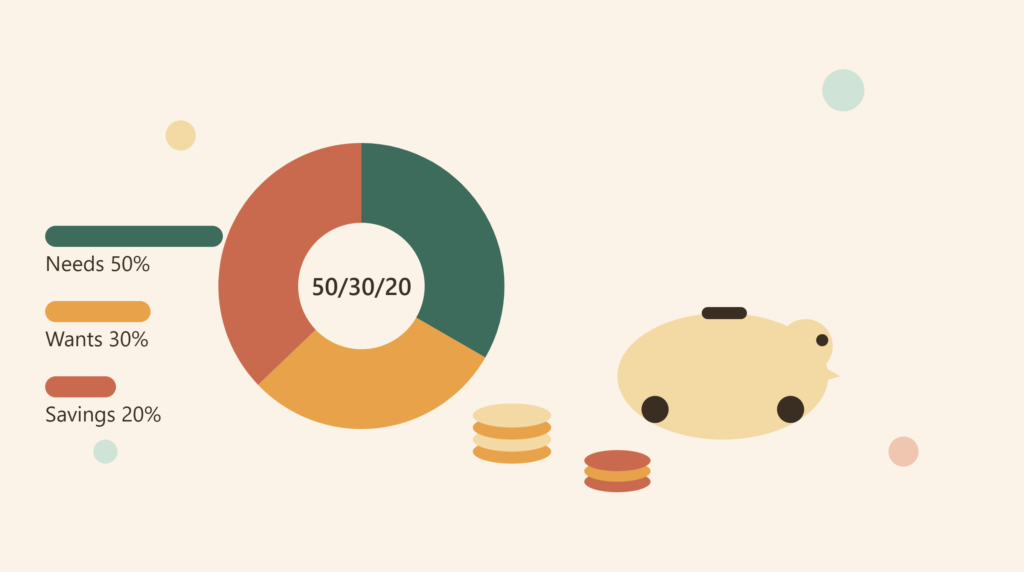
The 50/30/20 Budgeting Rule is a simple method that splits your take-home pay (the amount that actually lands in your account after tax) into three simple buckets:
- 50% for Needs — the things you can’t skip
- 30% for Wants — the things that make life enjoyable
- 20% for Savings and Debt Repayment — the things that build your future
It was popularized by Senator Elizabeth Warren and her daughter Amelia Warren Tyagi in their 2005 book on personal money management, and it’s stuck around because it doesn’t require tracking every rupee or dollar you spend. You just sort your spending into three buckets and check the percentages.
Breaking Down the Three Buckets

Here’s how a ₹40,000 monthly take-home salary would split under the 50/30/20 Budgeting Rule:
| Bucket | Percentage | Amount (₹40,000 salary) | Covers |
|---|---|---|---|
| Needs | 50% | ₹20,000 | Rent, EMI, groceries, utilities, transport, insurance |
| Wants | 30% | ₹12,000 | Eating out, subscriptions, shopping, travel |
| Savings/Debt | 20% | ₹8,000 | Emergency fund, investments, extra debt payments |
1. Needs (50%)
These are the non-negotiables — the bills that exist whether you like it or not:
- Rent or home loan EMI
- Electricity, water, gas
- Groceries
- Basic transportation to work
- Insurance and minimum loan payments
Example: If your monthly take-home pay is ₹40,000, your needs budget should ideally stay around ₹20,000.
2. Wants (30%)
This is the fun bucket — the stuff that isn’t essential but makes life pleasant:
- Eating out or ordering food
- Streaming subscriptions
- Shopping for clothes beyond basics
- Travel, hobbies, gadgets
Example: On that same ₹40,000 salary, ₹12,000 goes toward things you enjoy — guilt-free, because it’s already planned for.
3. Savings and Debt Repayment (20%)
This bucket is where your future self says thank you:
- Emergency fund
- Retirement or long-term investments
- Extra payments on credit card or loan debt
Example: ₹8,000 each month goes here. It doesn’t sound like a lot at first, but consistency beats intensity — small, regular savings add up faster than people expect.
Why the 50/30/20 Budgeting Rule Works So Well for Beginners
Most budgeting advice fails because it’s too detailed to stick with. Nobody wants to log every single expense forever. The 50/30/20 Budgeting Rule works because it’s a framework, not a strict formula — it gives your money direction without demanding perfection.
The “Hidden Subscriptions” Trap
Most people build their monthly budget fine — but forget the expenses that hit only once or twice a year: annual insurance premiums, Amazon Prime, PlayStation Plus, a domain renewal, a yearly gym membership. Because these don’t show up every month, they don’t get budgeted for, and then the month they’re due, the whole budget feels “broken.”
The fix: Add up all your yearly one-time expenses, divide the total by 12, and quietly stash that small amount into your Needs or Wants bucket every single month. This one small adjustment keeps your 50/30/20 Budgeting Rule accurate all year round — no surprise, no budget crash.
Example: If your annual expenses (insurance + Prime + gym + PlayStation Plus) total ₹18,000, that’s just ₹1,500 a month set aside in advance. Small adjustment, big peace of mind.
An Honest Note: It’s Not One-Size-Fits-All
Here’s something a lot of beginner guides skip: the 50% “needs” number was designed years ago, and in many cities today — especially where rent alone eats up a huge chunk of income — sticking exactly to 50% isn’t realistic. If your rent is high, don’t panic or assume you’re failing. Financial experts increasingly suggest treating the ratio as flexible, something closer to 60/20/20 or even 70/20/10 depending on your city and life stage. The one number worth protecting above all others is your savings percentage — even if it starts at 10% instead of 20%, protect it before you protect your “wants” spending.
Indian Context: Metro vs. Tier-2/3 Cities

Elizabeth Warren designed the 50/30/20 Budgeting Rule around American cost of living — but rent in Mumbai or Bangalore looks nothing like rent in Patna or Indore. So the “right” ratio genuinely depends on where you live:
| City Type | Suggested Ratio | Why |
|---|---|---|
| Metro (Delhi, Mumbai, Bangalore, Gurugram) | 60/20/20 or 70/10/20 | Rent eats up a much bigger share of income, so Needs must flex up |
| Tier-2/3 (Indore, Patna, Lucknow, Coimbatore) | 40/30/30 | Lower rent means you can push extra income straight into Savings |
| Moderate cost cities | 50/30/20 (Classic) | The original ratio still holds up reasonably well here |
The takeaway: don’t force yourself into the classic 50/30/20 Budgeting Rule if your city’s cost of living doesn’t allow it. Protect your savings percentage first, then adjust Needs and Wants around it.
A Mistake Almost Everyone Makes With the 50/30/20 Budgeting Rule
The single biggest budgeting mistake isn’t overspending — it’s miscategorizing wants as needs. A ₹25,000 rent when a comfortable ₹15,000 option exists nearby isn’t a “need” — the extra ₹10,000 is a want dressed up as a necessity. Being honest with yourself here is what makes the whole system actually work.
Lifestyle Creep: What to Do When Your Salary Increases
Here’s a trap that catches even disciplined budgeters. Your salary goes from ₹40,000 to ₹60,000 — a ₹20,000 jump — and almost automatically, your “Wants” grow too: a new phone, a new bike EMI, more frequent eating out. Your 50/30/20 Budgeting Rule ratio still looks perfectly correct on paper, but you’re not actually any better off, because your savings amount barely moved.
The fix — “Save the Raise”: Whenever your salary increases, immediately route 50% of the increase straight into your Savings bucket, before your lifestyle has a chance to adjust to it.
Example: Salary goes up by ₹20,000 → ₹10,000 goes straight to savings/investments, and only the remaining ₹10,000 gets divided across your Needs and Wants as usual. Your lifestyle still improves — just not as fast as your income does.
Calculate Your Custom 50/30/20 Budget Instantly
Interactive 50/30/20 Budget Calculator
Enter your monthly take-home salary to instantly calculate your custom financial roadmap.
Needs
50%₹0
Rent, groceries, utilities, EMIs, basic transport, insurance.
Wants
30%₹0
Dining out, streaming services, shopping, travel, hobbies.
Savings & Debt
20%₹0
Emergency fund, mutual funds, PPF, extra loan repayments.
Actionable Tips You Can Apply Today
- Calculate your real take-home pay — use your actual bank deposit, not your gross salary.
- List last month’s expenses and sort each one into Needs, Wants, or Savings. This alone is eye-opening.
- Automate your savings — set up an auto-transfer the day your salary arrives so saving isn’t a decision you have to make every month.
- Use two bank accounts — one for needs/bills, one for wants/spending money — so you always know what’s left to enjoy.
- Review monthly, not daily — checking your budget once a week is enough to stay on track without becoming obsessive.
- Adjust the ratio to your reality — if the classic 50/30/20 Budgeting Rule feels impossible where you live, try 60/20/20 and raise your savings percentage as your income grows.
Frequently Asked Questions
Q1. Is the 50/30/20 Budgeting Rule based on my salary before or after tax?
Ans: Always after tax — meaning your actual take-home pay, the amount that lands in your bank account, not your gross CTC.
Q2. What if my needs already cross 50% of my income?
Ans: That’s common, especially in metro cities. Shift to a more realistic ratio like 60/20/20, but try not to let your savings percentage drop below 10–15%.
Q3. Should EMIs count as “Needs” or “Savings”?
Ans: Minimum EMI payments (the amount you’re required to pay) count as Needs. Any extra amount you pay to close a loan faster counts as Savings/Debt Repayment.
Q4. Can I use the 50/30/20 Budgeting Rule if my income is irregular (freelancing, business)?
Ans: Yes — apply the percentages to your average monthly income over the last 3–6 months instead of a single month’s earnings, so one slow month doesn’t throw off your whole plan.
Q5. How often should I revisit my budget ratios?
Ans: Every time your income changes meaningfully, or once every 6 months at minimum — life changes, and your budget should too.
Quick Summary
The 50/30/20 Budgeting Rule splits your take-home income into 50% needs, 30% wants, and 20% savings or debt repayment. It’s popular because it’s simple enough for beginners but powerful enough to build real financial habits. It isn’t a perfect fit for everyone — especially in high cost-of-living areas — so treat it as a flexible guide rather than a strict law. Start by tracking where your money actually goes, automate your savings, and adjust the percentages to match your real life. The goal isn’t a perfect budget on day one — it’s simply knowing where your money is going, on purpose.
